No Knead Seeded Oat Bread Recipe
Introduction
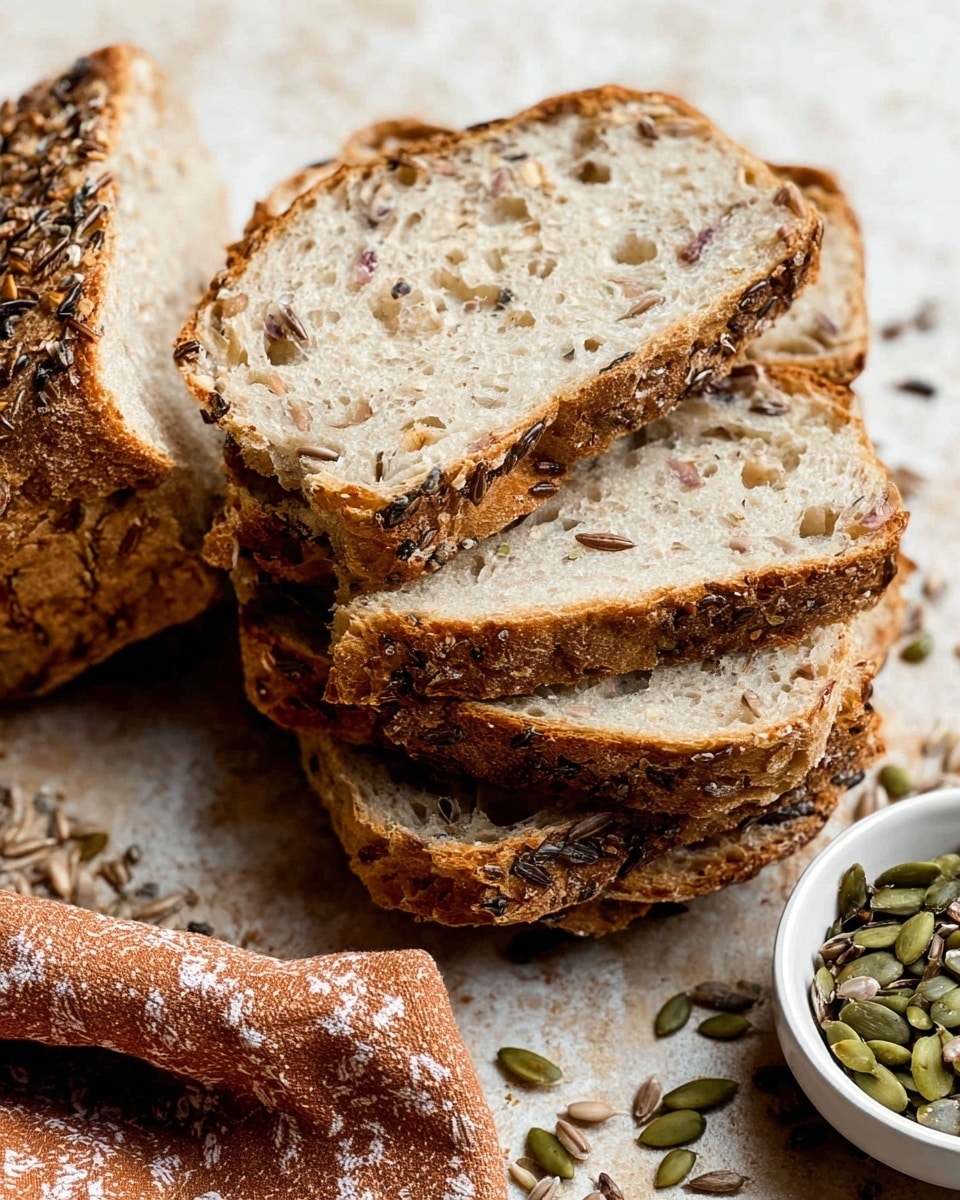
This No Knead Seeded Oat Bread is a simple, hands-off loaf packed with wholesome seeds and oats for extra texture and flavor. Perfect for beginners, it requires minimal effort while delivering a crusty, aromatic bread that’s great for sandwiches or toast.
Ingredients
- 3 cups (390g) bread flour (spooned & leveled), plus more as needed for shaping and pan
- 2 teaspoons (about 6g) Platinum Yeast from Red Star instant yeast
- 1 cup (85g) old-fashioned whole rolled oats
- 1/4 cup (30g) unsalted pumpkin seeds (pepitas)
- 1/4 cup (30g) salted or unsalted sunflower seeds
- 2 Tablespoons (18g) flax seeds or sesame seeds
- 2 teaspoons coarse salt
- 2 Tablespoons (43g) honey
- 1 and 1/2 cups (360ml) warm water (about 95°F / 35°C)
- Optional: cornmeal for dusting pan
- 1 Tablespoon (5g) old-fashioned whole rolled oats (for topping)
- 1 Tablespoon (8g) pumpkin seeds (pepitas) (for topping)
- 1 Tablespoon (8g) sunflower seeds (for topping)
- 1 teaspoon flax seeds or sesame seeds (for topping)
Instructions
- Step 1: In a large un-greased mixing bowl, whisk together the flour and yeast. Add the oats, pumpkin seeds, sunflower seeds, flax seeds, and salt, then whisk to combine.
- Step 2: Mix the honey with warm water, then pour over the dry ingredients. Use a silicone spatula or wooden spoon to gently mix until all flour is moistened. The dough will be sticky and shaggy; use your hands if needed to bring it together and shape it into a ball inside the bowl.
- Step 3: Cover the bowl tightly with plastic wrap or foil and leave at room temperature for 3 hours. The dough should double in size and develop air bubbles.
- Step 4: For best flavor and texture, refrigerate the covered dough for at least 12 hours and up to 3 days. The dough may puff up and later deflate slightly—this is normal.
- Step 5: Lightly dust a large nonstick baking sheet with flour or cornmeal. With generously floured hands, gently shape the dough into a ball without deflating it too much.
- Step 6: Transfer the ball to the prepared baking sheet. Mix the topping seeds and oats, then sprinkle on top, pressing them lightly into the dough as needed. Loosely cover and let rest for 45 minutes.
- Step 7: Preheat the oven to 425°F (218°C) during the dough’s final rest.
- Step 8: Score the dough with a sharp knife or bread lame to a depth of about 1/2 inch, making a slash or an X. If the dough spread out during the rest, gently reshape it.
- Step 9: Place the dough in the center of the preheated oven on the baking sheet.
- Step 10 (optional): For a crisper crust, set a shallow metal pan on the bottom rack and carefully pour 3–4 cups boiling water into it just before baking. Quickly close the oven to trap steam.
- Step 11: Bake for 40 minutes or until golden brown. If browning too fast, tent with foil. The bread is done when it sounds hollow when tapped or reaches 195°F (90°C) internally.
- Step 12: Remove from oven and cool at least 10–20 minutes before slicing.
Tips & Variations
- Use a mix of seeds you prefer—sunflower, pumpkin, flax, or sesame all add great flavor and texture.
- If you don’t have Red Star Platinum yeast, instant yeast from another brand works similarly.
- For a different flavor, substitute honey with maple syrup or agave nectar.
- Try baking the dough inside a Dutch oven or on a pizza stone for a different crust texture.
Storage
Store leftover bread loosely covered at room temperature for up to 3 days to keep the crust crisp. For longer storage, refrigerate up to 10 days. Reheat slices in a toaster or oven before serving for best texture.
How to Serve
Serve this delicious recipe with your favorite sides.
FAQs
Can I use all-purpose flour instead of bread flour?
Yes, you can substitute all-purpose flour, though bread flour’s higher protein content helps develop better structure and chew in the bread.
Do I need to knead the dough?
No kneading is required. This recipe relies on a long resting period to develop gluten and texture, making it easier for home bakers.
PrintNo Knead Seeded Oat Bread Recipe
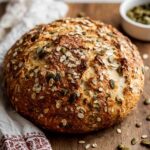
This No Knead Seeded Oat Bread is a simple, rustic loaf packed with wholesome seeds and oats. With minimal effort and no kneading required, this bread delivers a chewy texture, a crunchy seed topping, and a golden crust thanks to an easy 12-hour rise and a steam-baked finish. Perfect for sandwiches, toast, or enjoying plain, it’s a nutritious and flavorful homemade bread everyone can make.
- Prep Time: 15 minutes
- Cook Time: 40 minutes
- Total Time: 3 hours 55 minutes (plus optional 12-72 hours refrigeration)
- Yield: 1 loaf (about 12 slices) 1x
- Category: Bread
- Method: Baking
- Cuisine: American
- Diet: Vegetarian
Ingredients
Main Dough Ingredients
- 3 cups (390g) bread flour (spooned & leveled), plus more for shaping and pan
- 2 teaspoons (about 6g) Platinum Yeast from Red Star instant yeast
- 1 cup (85g) old-fashioned whole rolled oats
- 1/4 cup (30g) unsalted pumpkin seeds (pepitas)
- 1/4 cup (30g) salted or unsalted sunflower seeds
- 2 tablespoons (18g) flax seeds or sesame seeds
- 2 teaspoons coarse salt
- 2 tablespoons (43g) honey
- 1 and 1/2 cups (360ml) warm water (about 95°F / 35°C)
Topping Ingredients
- 1 tablespoon (5g) old-fashioned whole rolled oats
- 1 tablespoon (8g) pumpkin seeds (pepitas)
- 1 tablespoon (8g) sunflower seeds
- 1 teaspoon flax seeds or sesame seeds
- optional: cornmeal for dusting pan
Instructions
- Prepare the dry ingredients: In a large ungreased mixing bowl, whisk together the bread flour and instant yeast. Add the rolled oats, pumpkin seeds, sunflower seeds, flax or sesame seeds, and coarse salt, mixing to combine evenly.
- Mix the wet ingredients: Combine the honey and warm water in a separate container. Pour this mixture over the dry ingredients. Using a silicone spatula or wooden spoon, gently mix until all flour is moistened. The dough will be very sticky and shaggy—this is expected. Use your hands if needed to bring the dough into a rough ball.
- First rise: Cover the bowl tightly with plastic wrap or aluminum foil and leave it at room temperature for 3 hours until the dough almost doubles in size and develops air bubbles.
- Optional cold fermentation: For improved flavor and texture, refrigerate the covered dough for at least 12 hours and up to 3 days. Dough will puff during this time but may deflate slightly after 2 days, which is normal.
- Shape the dough: Lightly dust a large nonstick baking sheet with flour and/or cornmeal. Using floured hands, gently shape the risen dough into a ball, taking care not to deflate it, directly in the bowl or on a lightly floured surface.
- Add seed topping & rest: Transfer the shaped dough ball to the prepared baking sheet. Mix the topping seeds together and sprinkle them evenly over the dough’s surface, pressing gently to adhere. Loosely cover and allow dough to rest for 45 minutes.
- Preheat the oven: While the dough rests, preheat your oven to 425°F (218°C).
- Score the loaf: Using a sharp knife, bread lame, or kitchen shears, make a shallow 1/2-inch slash or an X pattern on top of the dough. If the dough has flattened during resting, reshape gently with floured hands.
- Bake the bread: Place the baking sheet on the oven’s center rack. Optional: place a shallow pan on the bottom rack, pour 3–4 cups of boiling water into it to create steam, and quickly close the oven door to trap the steam for a crispier crust.
- Baking time: Bake for about 40 minutes until the crust is golden brown. If browning too rapidly, tent with aluminum foil. The bread is done when it sounds hollow when tapped or an instant-read thermometer reaches 195°F (90°C).
- Cool before slicing: Remove the bread from the oven and let it cool on a wire rack or baking sheet for at least 10–20 minutes before slicing to set the crumb and prevent squishing.
- Storage: Store leftover bread loosely covered at room temperature for up to 3 days, or refrigerate for up to 10 days to maintain freshness.
Notes
- The dough is very sticky and wet—avoid adding excess flour to keep the crumb light and open.
- For best flavor, allow a long, cold fermentation in the fridge (12 hours to 3 days).
- Using steam in the oven helps develop a crispier crust.
- If you don’t have a nonstick sheet, dust well with flour or cornmeal to prevent sticking.
- Use a sharp blade for scoring to create clean cuts that help the bread rise evenly.
- This recipe does not require kneading, making it ideal for beginners.
- Store bread properly to keep it fresh longer.
Keywords: no knead bread, seeded oat bread, homemade bread, easy bread recipe, no knead bread with seeds, whole grain bread, artisan bread