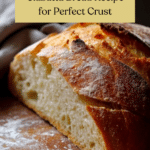
Crusty Homemade Ciabatta Bread Recipe

A classic Italian ciabatta bread recipe, known for its airy texture and crispy crust. This simple loaf combines a wet dough with minimal ingredients and requires gentle handling and a good resting period to develop its characteristic holes and chewy bite. Perfect for sandwiches or serving alongside soups and salads.
- Prep Time: 15 minutes
- Cook Time: 25 minutes
- Total Time: 2 hours 15 minutes
- Yield: 1 loaf (about 12-inch size, serving 8) 1x
- Category: Bread
- Method: Baking
- Cuisine: Italian
Ingredients
Scale
Basic Dough Ingredients
- 4 cups (500g) all-purpose flour
- 1 1/2 teaspoons active dry yeast
- 1 1/2 cups (360ml) warm water (about 110°F/45°C)
- 2 tablespoons olive oil
- 2 teaspoons salt
Instructions
- Prepare the Yeast Mixture: In a large mixing bowl, combine the warm water and yeast. Stir gently and let it sit for about 5 to 10 minutes until it becomes foamy, indicating the yeast is active.
- Make the Wet Dough: Add the flour, olive oil, and salt to the yeast mixture. Using a wooden spoon or your hand, mix until a sticky, slack dough forms. It will be wetter and looser than typical bread dough.
- First Rise: Cover the bowl with a damp kitchen towel or plastic wrap. Let the dough rise at room temperature for about 1 to 1.5 hours, or until doubled in size and bubbly.
- Shape the Loaf: Generously flour a work surface. Gently tip the dough onto it, being careful not to deflate it too much. Using lightly floured hands, fold the dough over itself a few times to shape it into a rough oblong or slipper shape (ciabatta means slipper in Italian).
- Second Rise: Transfer the shaped dough onto a parchment-lined baking sheet. Cover loosely with a kitchen towel and allow it to rise for another 30 to 45 minutes until puffed.
- Bake the Bread: Preheat the oven to 450°F (230°C) with a baking stone or inverted baking tray inside to heat. Just before baking, sprinkle some water into the oven to create steam for a crisp crust. Place the bread on the hot stone or tray and bake for 20 to 25 minutes until the crust is golden brown and sounds hollow when tapped.
- Cool: Remove from the oven and transfer the ciabatta onto a wire rack. Let it cool completely before slicing to preserve its airy texture.
Notes
- Using a high-hydration dough (wet dough) is key to achieving the signature open crumb structure of ciabatta.
- Be gentle when shaping to keep the air bubbles intact for a light texture.
- Creating steam in the oven helps develop a thin, crackly crust.
- For best results, use bread flour for higher gluten content, which improves the structure.
- This bread is best eaten the same day but can be reheated to refresh the crust.
Keywords: ciabatta bread, Italian bread, homemade bread, crusty bread, airy bread, easy bread recipe
Find it online: https://famdishes.com/crusty-homemade-ciabatta-bread-recipe/