30 Minute Homemade Ravioli Dough Recipe
This 30-minute homemade ravioli dough recipe delivers a soft, smooth, and slightly sticky pasta dough perfect for making authentic ravioli from scratch. Using just a few simple ingredients like ’00’ flour, eggs, warm water, and salt, you’ll create a delicate dough that can be rolled thin and filled with your favorite fillings. The step-by-step instructions guide you through kneading, resting, rolling, filling, and cutting, ensuring perfect ravioli every time. Whether you use a pasta machine or your hands, this dough is a fantastic base for an impressive homemade Italian meal.
- Prep Time: 15 minutes
- Cook Time: 5 minutes
- Total Time: 30 minutes
- Yield: Approximately 24-30 ravioli depending on size 1x
- Category: Pasta
- Method: Stovetop
- Cuisine: Italian
Ingredients
Dry Ingredients
- 4 cups “00” flour (King Arthur’s 00 Flour recommended)
- 1 tsp salt
Wet Ingredients
- 1 ¼ cup warm water (reserve ¼ cup to use as needed)
- 1 whole egg
- 2 egg yolks
Instructions
- Prepare the flour and salt: Pour the flour mixed with salt onto a clean wooden cutting board or countertop and create a well in the center.
- Add eggs: Crack the whole egg and add the two egg yolks into the well in the flour.
- Mix eggs and flour: Using a fork, gently combine the eggs by pulling in flour gradually from the sides. Begin adding ¼ cup of water and alternate small amounts of flour and water until a dough ball begins to form. It’s fine if not all flour and water are used.
- Knead the dough: Knead by rolling, pulling the dough toward you, turning it a quarter, and pushing it away repeatedly, until it becomes smooth and a little sticky to the touch.
- Check texture and adjust: Aim for a soft, smooth ball that feels slightly sticky. This can vary due to weather and humidity; adjust by adding a bit more flour or water if necessary.
- Rest the dough: Lightly flour the dough and cover it with a damp dish towel or plastic wrap. Let it relax for 15-20 minutes to develop elasticity.
- Divide dough: Cut the dough into four equal parts. Work with one piece and keep the rest covered to prevent drying out.
- Shape dough for rolling: Flatten the quarter piece into a rectangle about ½ inch smaller than the width of your pasta roller’s rollers.
- Roll dough – first passes: If using a pasta machine attachment, set rollers to the widest setting (#1) and pass the dough through twice. Fold the dough in thirds lengthwise (booking) and turn it. Set roller to #2 and pass the dough through again.
- Roll dough – thin it out: Continue feeding the dough through progressively narrower settings until thin enough to see the shadow of your hand through it (about setting #6 on the roller).
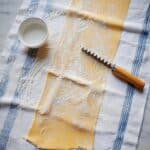
- Prepare for filling: Lay the rolled dough on a floured surface. Identify the center of the long edge to organize filling placement.
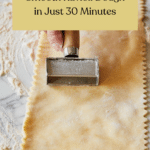
- Mark filling spots: Use a ravioli stamp to imprint where the filling will go. This ensures evenly spaced ravioli pockets.
- Add filling: Place up to 1 tablespoon of your desired ravioli filling into each marked cavity.
- Brush edges: Using a pastry brush, dampen the edges around each filling mound with water to help seal the dough layers.
- Seal ravioli: Fold the dough over the fillings, pressing gently with two fingers around each filling mound to push out air and seal completely.
- Cut ravioli: Dust the ravioli cutter with flour and press firmly through the dough, wiggling slightly to ensure the ravioli are fully cut free from the sheet.
- Store or cook: Transfer cut ravioli to a floured baking sheet, cover with a dish towel, and refrigerate if not cooking immediately.
- Cook ravioli: Boil a large pot of heavily salted water. Cook ravioli for 3-5 minutes until they float to the top, indicating doneness.
Notes
- Using “00” flour is crucial for the perfect pasta texture; it’s finer and gives a silkier dough.
- The dough should be slightly sticky but manageable; environmental conditions may require adjusting water/flour amounts.
- Allowing the dough to rest is essential to relax gluten and make rolling easier.
- If you don’t have a pasta machine, you can roll out the dough thinly by hand with a rolling pin.
- Keep unused dough covered tightly to prevent drying out.
- Cooking water should be heavily salted to season the pasta.
- Fresh ravioli cooks quickly; do not overcook as they may burst.
- For best results, fill ravioli with moist but not too wet fillings to avoid waterlogging the dough.
Keywords: homemade ravioli dough, fresh pasta dough, easy ravioli recipe, Italian pasta, homemade pasta
Find it online: https://famdishes.com/30-minute-homemade-ravioli-dough-recipe/